Possible application area:
- rapid determination of the main characteristics of oil and petroleum products;
- quick comparison of samples;
- identification of the source of origin.
Program advantages:
- high speed of data processing and report generation;
- simultaneous analysis of a large number of samples;
- ability to set retention time range for analysis;
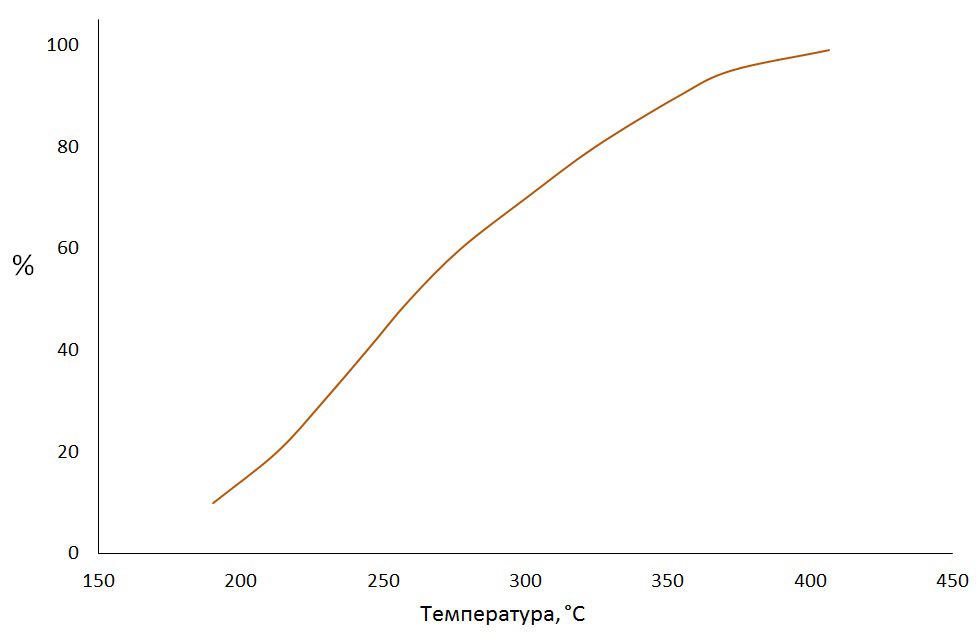
- obtaining distillation curves for various hydrocarbon groups.
Processing procedure using the program:
- analyze the test and blank samples;
- convert data files to CDF format;
- analyze a standard n-alkane sample (or oil sample) and build a calibration (only if fractional composition determination is necessary);
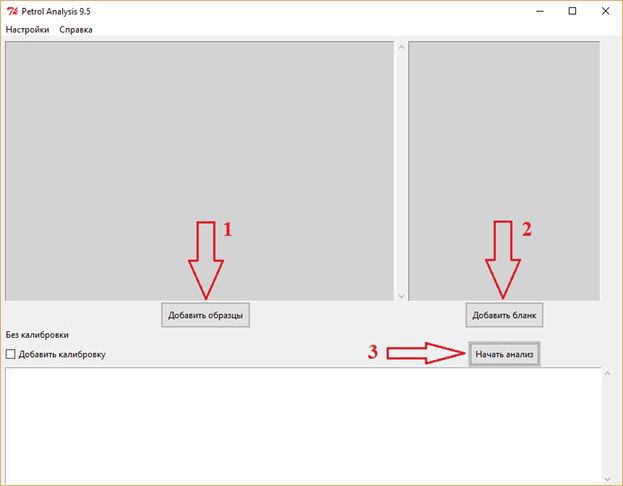
- run the program, add all CDF files of the test samples and the CDF file of the blank sample, as well as the calibration file (if necessary);
- start processing and specify a file name to save the results;
- obtain XLS files with all processing results.
To determine the fractional composition, the program uses the simulated distillation method, and for determining the component composition, the class analysis technique of aromatic and saturated hydrocarbons (Robinson, 1971).
The program calculates the mass fractions (semi-quantitatively) of the following 11 classes of hydrocarbons:
- paraffins
- non-condensed cycloparaffins
- condensed cycloparaffins with 2 rings
- condensed cycloparaffins + all cycloparaffins with 3 rings
- benzenes
- naphthenobenzenes
- dinaphthenobenzenes
- naphthalenes
- acenaphthenes
- fluorenes
- phenanthrenes
The boiling diagram of samples is constructed in the range of 90-540 ºC. To construct the boiling diagram, calibration with normal alkanes in the required boiling temperature range is necessary, which can be done using a standard alkane sample or an oil sample with a high content of normal alkanes. Determination of the component composition is possible without calibration.
The program accepts chromatogram files in NetCDF/AIA (.CDF) format and takes about 2 seconds to process 1 data file. Exporting GC-MS data to CDF format via MSD ChemStation takes about 3-5 seconds.
Current users of the Petrol Analysis program:
- Institute of Forensic Expertise in Almaty;
- Korkyt Ata Kyzylorda State University
Software acquisition:
If you are interested in acquiring the Petrol Analysis software, write to email bkenesov@cfhma.kz. After purchasing the software, you will be provided with free updates (ensuring higher analysis accuracy) for 2 years, as well as support by phone and email. All buyers until December 31, 2016, receive a special 20% discount and a free version of the statistical analysis program (for sample comparison).
If you are interested in a version of the program for another GC-MS system (not Agilent), contact us for free testing.